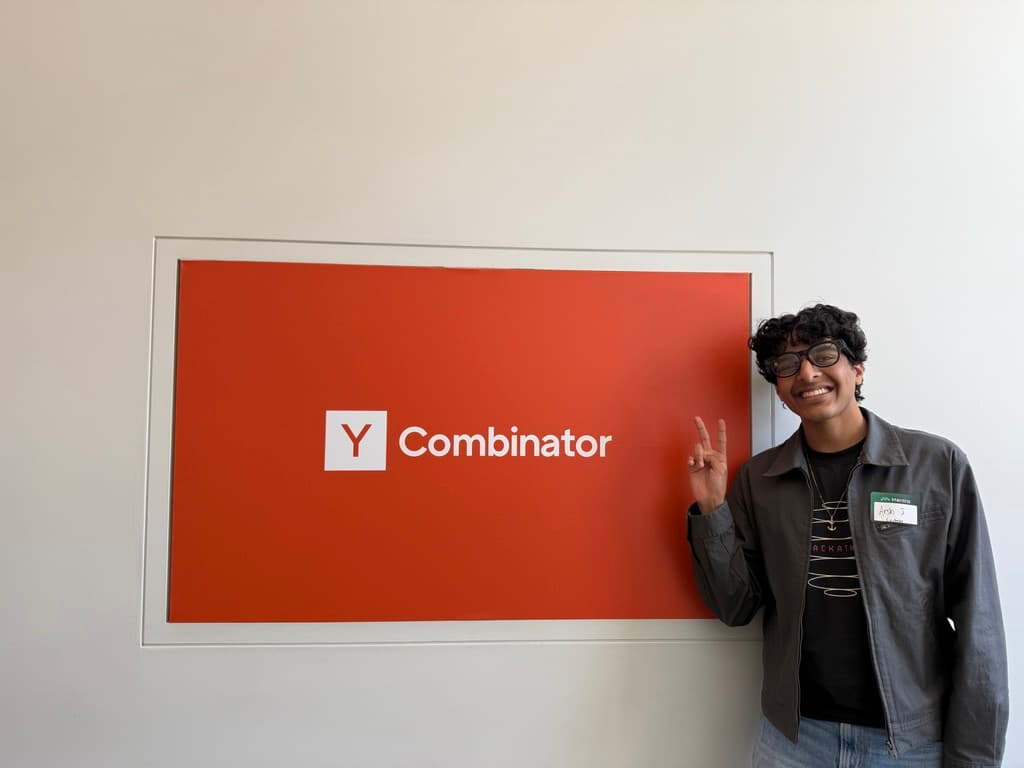
After doing the MARA hackathon with my roommate Cole Dermott and his friend back at college William Wang, we wanted to do some more hackathons! We saw on Luma:
"Join us for the Mentra Live Smart Glasses Hackathon, hosted at the Y Combinator headquarters in San Francisco! We're gathering 100 talented hackers and developers, pairing each with a Mentra Live pre-release camera smartglasses, and unleashing creativity, innovation, and imagination."
We had to go. A chance to go to YC headquarters and we get to develop on smart glasses! So we all applied to the hackathon, and we all got in! I've worked a little bit on VR when I helped out our district's middle school VR development program during my senior year of high school, but I had never developed or even used AR smart glasses. I always thought the technology was cool, but never had the chance to have them. We came in with a team, so all we had to do was come up with an idea and execute.
The Idea
The idea for our project, PricePal, actually came from a pretty ordinary moment. A while back, I was in Best Buy staring at a WiFi adapter for $40. Out of curiosity, I checked Amazon on my phone and saw the exact same product for $15. I had almost wasted $25 just because I didn't stop to look. That stuck with me, and when we sat down to brainstorm at the hackathon it clicked. What if you could look at any product through your glasses, ask whether it was a good price, and get the answer right away?
That's what we built. PricePal turns Mentra glasses into a personal shopping assistant. You look at something, ask "Hey Mentra, is this a good price?" and it tells you if you're getting ripped off or if the deal is worth it. We stitched it together using Mentra's camera and microphone APIs, ElevenLabs for voice generation, and Gemini's grounded search to pull live prices from online retailers and for computer vision support. The glasses could then talk back with a simple answer or show the comparison right in the display.
The issue that we ran into was that they had two glasses. One with a camera and a speaker, and one with a screen and speaker. This was frustrating as we envisioned a product where we wouldn't need anything else, just your glasses and whatever product was in front of you. We ended up choosing the one with a camera and a speaker, as that is essential for our product, and ended up relying a lot on the speaker for voice output and if you wanted more detail, we had an entire UI on the phone to show more details about the product you were looking at.
Building it in under 24 hours was equal parts exciting and chaotic. Mentra's APIs were brand new, so we were figuring things out as we went. We hacked together a voice activation flow, built a pipeline to send images off for recognition, and layered in the price search and comparison. At one point we even managed to deploy a live version during the hackathon using Vercel, which felt risky but paid off in the demo.
The best part was running through scenarios in real time. At Best Buy: "Hey PricePal, is this USB adapter a good price?" and hearing the glasses respond that it was cheaper on Amazon. Or holding up Meta's Ray-Ban glasses and having PricePal point out that the Mentra ones were over a hundred dollars less with more flexibility. Every time it worked, people around us were surprised at how natural it felt.
They ended up posting our project to our project to their x account, and it was super cool to see all of the interactions and comments of people genuinely seeing how useful this could be! (I am in the video I swear look at the last few seconds haha)
Looking back, the biggest takeaway wasn't just that we made something that worked. It was seeing how fast an idea that feels like a consumer fantasy—never overpaying again—can actually come to life when you're forced to ship in a weekend. And on top of that, it was just plain fun to hack on pre-release AR hardware at YC, surrounded by people trying to figure out what the future of this tech might look like.
My Opinions on the Tech
Because a lot of this tech was pre-release, there were lots of small things we had to get around, but overall, the tech was pretty alright. Before deciding on our idea, we were trying out both the camera glasses and the screen glasses, and the screen showed only green text, which I was kind of surprised by but it makes lots of sense. I see lots of applications for helping people with disabilities like those who are hard of hearing, or maybe for directions without having to look down at your phone.
Maybe smartglasses will lead to a world which ironically would lead to less people looking at a screen. I mean you will have one on your face, but often I pick up my phone to do an essential task, and end up getting distracted by Instagram or Reddit or whatever app is vying for my attention. In a world of smart glasses, I can send messages, hear notifications, and do everything just with a quick voice prompt.
Overall, this tech is super cool and I do see a future for it, but there is still lots of improvement that needs to be made before these are mainstream. Big thanks to Mentra for putting on the event, and to Cole and William for building PricePal with me!